
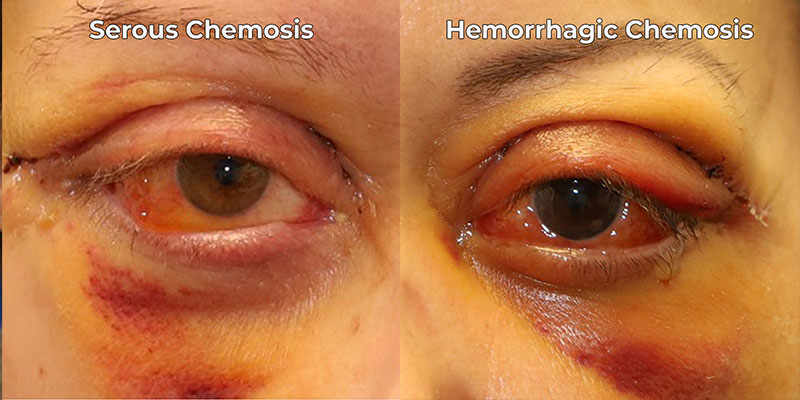
After orbital surgery you may experience chemosis in New Jersey, which is swelling of the conjunctiva or the outermost layer of the eyeball. Just like you have skin on your body, the eyeball itself has skin. When edema, or swelling, gathers underneath this layer it is called chemosis. Chemosis can be serous (filled with clear fluid) or hemorrhagic (filled with blood). Just like swelling after surgery can be associated with dark purple bruises or just skin-colored swelling, chemosis can be of these 2 types.
Chemosis
New Jersey
What is post-operative chemosis?

Is chemosis dangerous?
Chemosis is absolutely not dangerous. Just like swelling under the eyelids, cheeks, or neck take time to improve after surgery, chemosis also takes time. However, chemosis is generally not dangerous to the eye itself. However, chemosis can be irritating and patients can report dryness, itching, or a scratchy feeling on their eyes when chemosis is present.
How is chemosis treated?
The most effective treatment for chemosis is time. Chemosis improves on its own as the body absorbs the residual fluid after surgery. Gentle warm compresses (5 minutes, 2-4 times daily) with a warm, wet washcloth can help the process of chemosis in New Jersey heal faster. Sometimes, Dr. Ramesh prescribes oral or topical steroid medication to help with chemosis. In rare instances, Dr. Ramesh might use a patch over the eye to provide additional treatment.
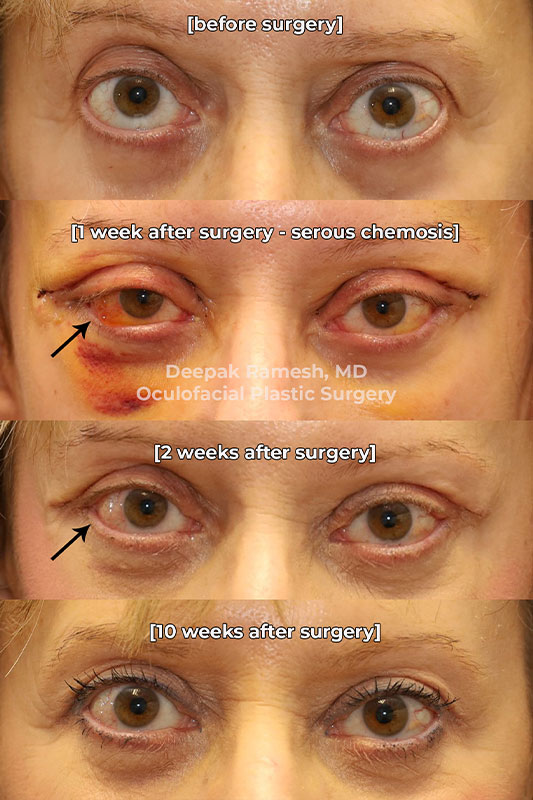

If you have chemosis after surgery, do not worry. Most patients do experience some chemosis in the first weeks after surgery, which will resolve completely as the tissues heal. Please feel free to contact our office for any additional information.